Or don’t. The important thing is to always respond. Why? Because leaving them unaddressed creates mental clutter, not only for you but also for your team and, if you have one, your executive assistant (EA).
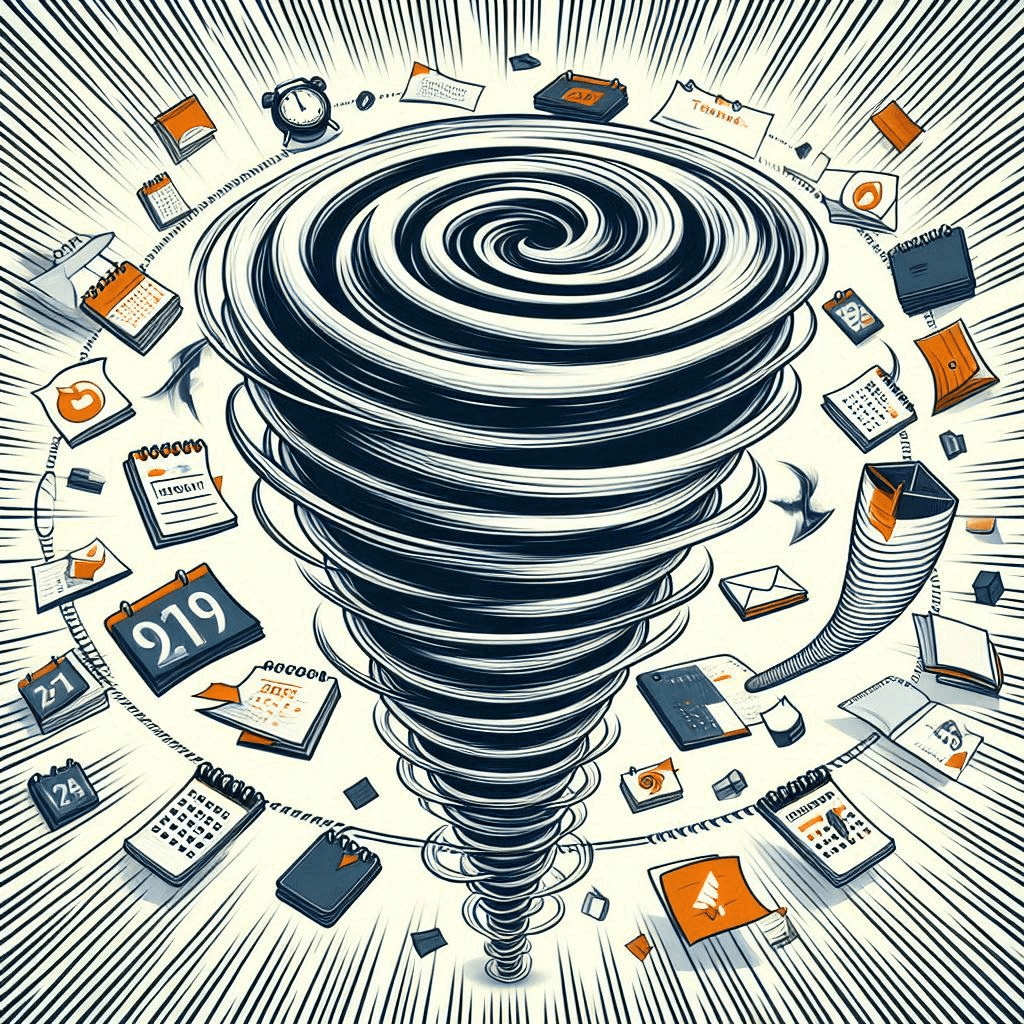
Not responding to invites is a surprisingly easy way to lose control over your productivity. As the saying goes, “A cluttered desk, a cluttered mind.” Research published by the National Library of Medicine shows that too much mental clutter leads to distractions and decreased productivity. Likewise, a study in Current Psychology links procrastination and clutter, finding that multitasking can trigger higher cortisol levels, impacting mental health.
Extensive clutter and disorganization make it harder to focus. Since the brain can only juggle a few pieces of information at a time, excessive details or disorganization can quickly lead to cognitive overload, affecting working memory.
Decision fatigue is another phenomenon that comes into play: the more decisions you make throughout the day, the more depleted you feel—physically, mentally, and emotionally. This depletion impairs judgment and decision-making. So, if your calendar is filled with overlapping meetings, each glance at it adds to your decision load and drains your mental energy.
The Good News
You can overcome calendar clutter.
- When a meeting invite arrives, respond immediately—accept or decline on the spot. If you decline and the meeting organizer really needs you, they’ll reach out again; otherwise, it probably wasn’t crucial.
- If you have an EA, meet regularly to keep in sync with your changing priorities so they can manage your schedule proactively.
- AI-based calendar apps offer smart inexpensive solutions for scheduling; Zapier has a great roundup titled The 8 Best AI Scheduling Assistants in 2024 that’s worth checking out.
Bottom Line
Responding promptly to meeting invites is key to reducing mental clutter, improving productivity, and avoiding decision fatigue, which can impair judgment and focus. By keeping a well-organized calendar and enlisting the help of an EA or AI scheduling assistants, you can streamline your schedule and maximize your Return on Minute.
Bonus
Decision fatigue happens to everyone at some point. Here are a few simple ways to minimize decision fatigue.
- Automate choices where you can. For example, have the same thing for breakfast. Do the same bedtime routine. Removing choice on the simple things means that’s one less thing to worry about.
- Delegate where possible. Give yourself the ability to let go. Perfection does not have to be the standard for everything.
- Prioritize sleep. Especially if you are in a decision heavy phase of your life.
- Exercise. It can improve the executive function according to a study in the British Journal of Sports Medicine that found that combining 30 min of moderate-intensity exercise with a three-minute walk break every half hour.
- Schedule downtime. Everyone needs to recharge be it meditation, taking your dog on a walk, or scrolling through social media. Give your brain a chance to recharge so it can be ready for tough choices later.
Image created by Image Creator in Bing


 Return On Minute
Leave a comment