

What do a shoe salesman, jam, and Steve Jobs all have in common? They all understand that less is more. If you ever feel overwhelmed by too many choices, here are some practical strategies to help you make more confident decisions and feel better about it in the process.
Let’s Begin
If you’re a follower of the podcast, A Bit of Optimism, hosted by Simon Sinek than you’re probably familiar with the “Two, not three” story. For those who may have never heard the story it goes like this. Starting as a shoe salesman in the 1920’s, Ben Prober went on to own his own very successful shoe stores, Prober’s Shoes. His prices weren’t the cheapest. The selections were similar to the other shoe stores in town. There was no obvious competitive advantage.
When asked the secret to his great success, Ben would reply simply, “two, not three.” Ben understood the fundamental principle that more isn’t always better. When a customer came into one of his shops, the odds were good that the customer would want to try on more than one pair of shoes. If the customer already had two styles to choose from and asked for a third option Ben would reply,
“Of course, I’d be happy to fetch you the style of your choice. Which one would you like me to take away?”
What Ben had tapped into was the choice paralysis. When his customers had two options, they could easily make a choice which style they preferred. However, when they had three or more to choose from, they often bought nothing.
Fast forward to the year 2000, psychologists Sheena Iyengar and Mark Lepper published a study on jam with similar results. On one day, shoppers at an upscale food market saw a display table with 24 varieties of gourmet jam. Those who sampled the spreads received a coupon for $1 off any jam. The next day, shoppers saw a similar table, except that only six varieties of the jam were on display. While the large display attracted more interest than the small one, when the time came to purchase, people who saw the large display were one-tenth as likely to buy as people who saw the small display.
Other companies have found tremendous success in applying the principle of limiting choice. In-N-Out Burger has had a persistently minimal menu since the 1950s. Or consider Steve Jobs’ Apple: When he returned to the company in 1997, one of his first moves was to slash their product line by two-thirds.
Leadership Today
In leadership the ability to make good decisions is critical. Leaders who excel in decision-making can navigate challenges, inspire confidence, and drive their teams toward success. This is why great leaders define their criteria and limit their options.
Try this
The next time you’re making a decision: Give yourself the choice of two items. You must decide whether to choose option A or option B. Once you reject an option, you cannot go back to it. Then move on to the next set and repeat as many times as you need to get to the best option. In this way you maximize the probability of selecting the best option.
This can also be applied to creating a prioritized list: Give yourself the choice of two items. You must decide whether to choose option A or option B. Same as before. Then weigh Option A against Option C. Let’s say you choose Option C. So now you know A is better than B and C is best of all. You now have a prioritized list.
But Wait There’s More
By limiting choice, it increases satisfaction. An abundance of choices, paradoxically, often triggers a cascade of emotions, such as anxiety, indecision, and dissatisfaction, due to the responsibility of choosing the “right” option according to “The Paradox of Choice: The Intersection of Freedom and Anxiety” By reducing options to a manageable number, people are more likely to feel confident, satisfied, and avoid regret.
Bottom Line
The secret to decision-making bliss? Reduce the number of options. Leaders who apply this decision-making approach deliver better outcomes, improve confidence and satisfaction.
Dive Deeper
- Five Prioritization Frameworks Every Leader Should Know (Return On Minute)
- The Paradox of Choice by Barry Schwartz
- More Isn’t Always Better (Harvard Business Review)
- The Psychology of Choice in Marketing Strategy (Business.com)
- Less Is More, More or Less (Psychology Today)
- The 12 Characteristics of a Good Leader (CCL)
Who is Ben Prober?
While researching this article I went deep into the rabbit hole to find out more about the humble Ben Prober. To save you all the effort here’s what else I uncovered.
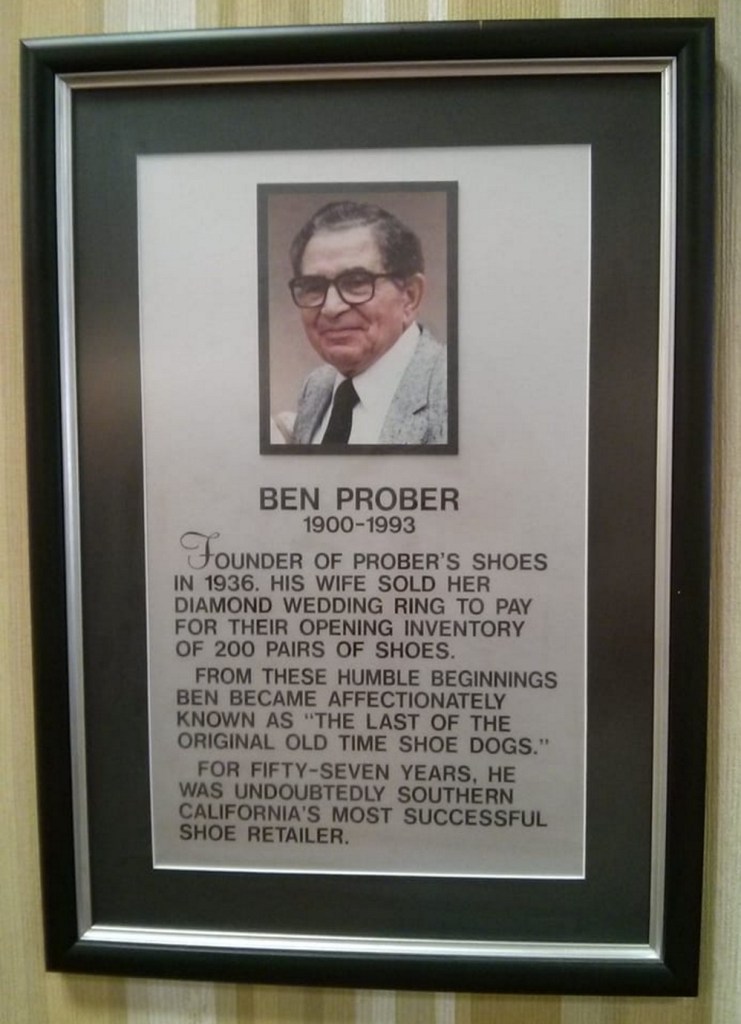
Born in Russia in 1903, Ben Prober, immigrated to the U.S. in 1911 where he lived with his family in Coatesville, PA and then later Philadelphia, PA. In 1924 he moved to Southern California. One of his first jobs was a shoe salesman for Karl’s Shoes. In the summer of 1936 Ben opened Probers Shoes in Alhambra, CA. His wife, Cecil, sold her diamond wedding ring to pay for their opening inventory of 200 pairs of shoes. For 57 years he was affectionately known as “the last of the original old time shoe dogs.” Ben died after a long illness on June 15, 1993.
Information from Los Angeles Times Obituary June 17, 1993, and this lovely photo from Prober’s Shoes, now closed.




 Return On Minute
Leave a comment