Recently I was staying at a hotel, and the air conditioning wasn’t working right. I called the front desk to mention it, and they say, “Oh yeah, we know about that, and someone is going to come fix that next week” (after I’d left). The end. Not a word of apology, no tone of regret.
Now I am a very unhappy customer at this point. What was a mild annoyance of having a room that was too cold is suddenly the end of the world and I’m already writing a scathing email to management in my head.
However, if the staff had said something like this: “We’re so sorry. That’s clearly unacceptable. I completely understand how it must be almost impossible to sleep when it’s so cold in your room. If I can’t fix this problem for you tonight, would you like me to move you to another room, or refund your stay? In any case, while we’re figuring out the solution, allow me to give you free drink vouchers to enjoy in our hotel bar. We’re terribly sorry for this inconvenience and we’ll do everything to make it right.”
With an answer like that, I would have said, “It’s no big deal. Drinks in the bar would been great.”
“Pretend that every single person you meet has a sign around his or her neck that says, ‘Make me feel important.’ Not only will you succeed in business, you will succeed in life.” – Mary Kay Ash (Founder of Mary Kay Cosmetics)
This is a simple concept called the choice of two tokens. It was developed by Jean-Louis Gassée head of Apple Macintosh development in the late 1980s. The concept goes like this:
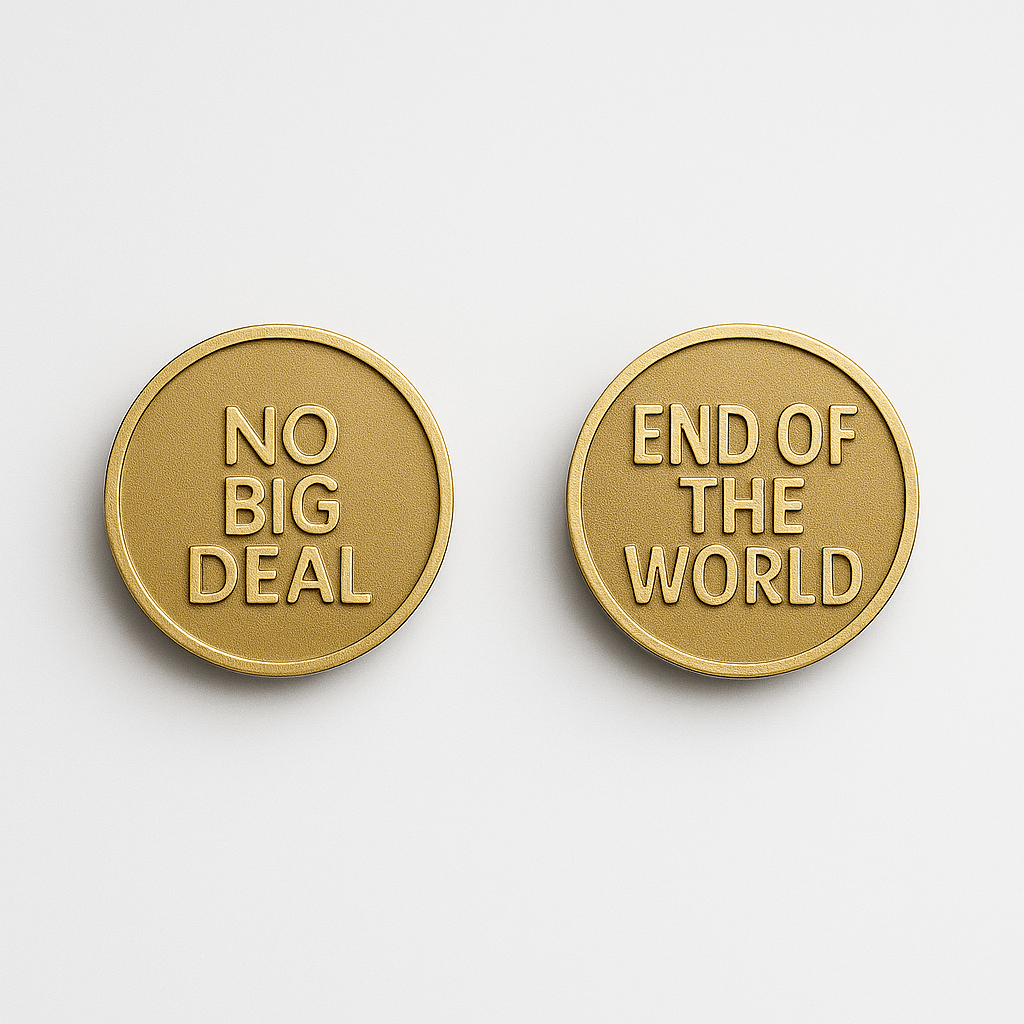
Whenever there is a complaint, imagine two metaphorical tokens on the table. Only one token can be picked by each party.
- Token 1: “It’s No Big Deal”
- Token 2: “It’s the End of the World”
If Person A chooses “It’s No Big Deal,” Person B is left with “It’s the End of the World.” That means the Person A feels dismissed, unheard, and possibly even insulted. But if Person A picks “It’s the End of the World,” Person B is free to take “It’s No Big Deal,” feeling validated and reassured.
WHY IT’S IMPORTANT
Everyone wants to be heard and respected. It usually takes less time and doesn’t cost much to do either.
When people acknowledge the seriousness of a customer’s issue—even if it’s minor—they show respect and care. Additionally, customers who feel heard are more likely to forgive mistakes and even become advocates according to an American Marking Association study.
BOTTOM LINE
By choosing the “End of the World” token, great leaders can defuse tension and turn a negative experience into a positive one.


 Return On Minute
Leave a comment