

If there’s anything that a decade of experience as a Chief of Staff has taught me it’s that every team, large or small, struggles with prioritization. Resources are constrained and motivations across stakeholders vary.
Enter prioritization frameworks. They are indispensable tools that empower leaders to navigate competing agendas, allocate resources wisely, and focus on initiatives that drive the most business impact. Whether managing day-to-day tasks or plotting long-term objectives, frameworks can help leaders bring order to chaos and make smart choices.
It’s not magic, it’s method. Here are five prioritization frameworks that every leader should know. Bonus templates below.
1. Eisenhower Matrix (Urgent-Important Matrix)
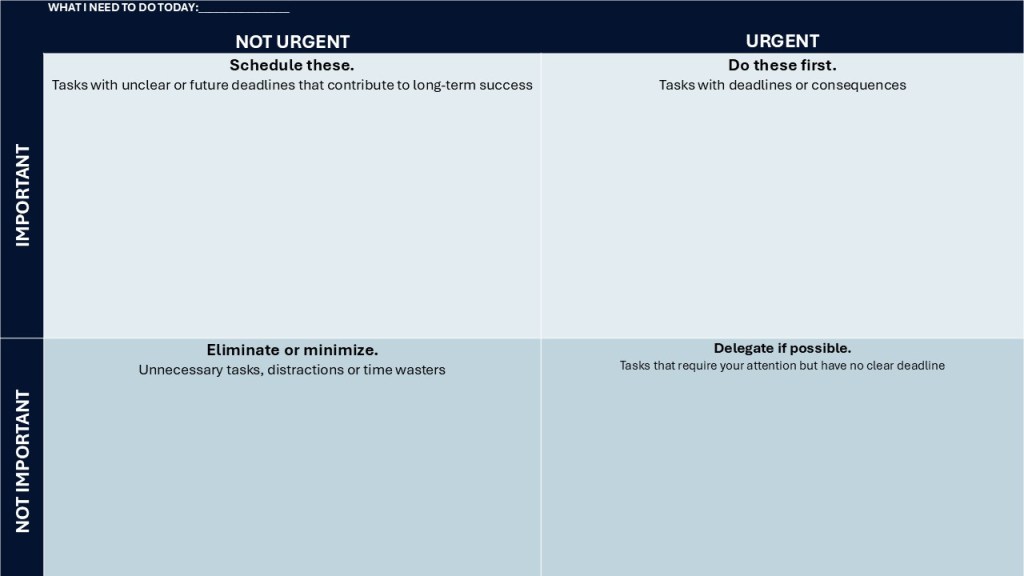
The Eisenhower Matrix is a time-management tool used to classify tasks by urgency and importance, guiding decision-makers on what to do, delegate, schedule, or eliminate. Ideal for quick decisions on immediate priorities, especially in daily task management and short-term planning.
- Pros: Simple and intuitive; helps distinguish between urgent and important tasks.
- Cons: Limited applicability for complex projects with multiple criteria.
How To: Categorize tasks or projects into four quadrants based on urgency and importance:
- Urgent and Important: Do these first.
- Important, Not Urgent: Schedule these.
- Urgent, Not Important: Delegate if possible.
- Not Urgent, Not Important: Eliminate or minimize.
2. Tradeoff Matrix
The Tradeoff matrix is a visual decision-making tool designed to help systematically evaluate and balance competing priorities or agendas. It is particularly valuable in situations where there are multiple competing priorities and decision-makers need a clear, structured way to evaluate options such as annual planning.
- Pros: Transparency, Objective Comparison, and Strategic Alignment
- Cons: subjectivity in scoring, time-intensive, static snapshot
How to: Initiatives are scored or ranked for each criterion. You can use a weighted scoring system if some criteria are more critical than others.
- Financial Impact (e.g., ROI or cost savings)
- Strategic Alignment (e.g., relevance to organizational goals)
- Resource Intensity (e.g., effort or time required)
- Risk (e.g., likelihood of failure or downside risks)
- Stakeholder Satisfaction (e.g., political capital or customer impact)
3. Impact-Effort Matrix
The Impact-Effort Matrix is a visual prioritization tool used to categorize tasks based on their expected impact and required effort. It is ideal for teams seeking to identify high-impact, low-effort opportunities for quick wins vs long-term investments. Especially useful when impact and effort are clearly defined.
- Pros: Simple visual representation; highlights high-impact, low-effort tasks.
- Cons: Oversimplifies complex projects; subjective assessment of impact and effort.
How to: Plot projects on a 2×2 matrix:
- High Impact, Low Effort: Prioritize immediately.
- High Impact, High Effort: Plan strategically.
- Low Impact, Low Effort: Do if time/resources permit.
- Low Impact, High Effort: Avoid or deprioritize.

4. OKR Alignment
OKR (Objectives and Key Results) is a goal-setting framework that helps organizations align initiatives with measurable outcomes to drive strategic focus and accountability. It is especially useful for teams striving to connect daily efforts with overarching objectives. It ensures projects align with strategic objectives, making it ideal for organizations with clear OKRs.
- Pros: Promotes accountability; aligns projects with broader goals.
- Cons: Requires well-defined OKRs; challenging to implement in dynamic environments.
How to: Four simple steps
- Define You Objectives
- Identify the Key Results. They should be specific, time-bound, and actionable.
- Get alignment across teams.
- Set timeframes to review projects that directly contribute to achieving key results.
5. RICE Scoring Model
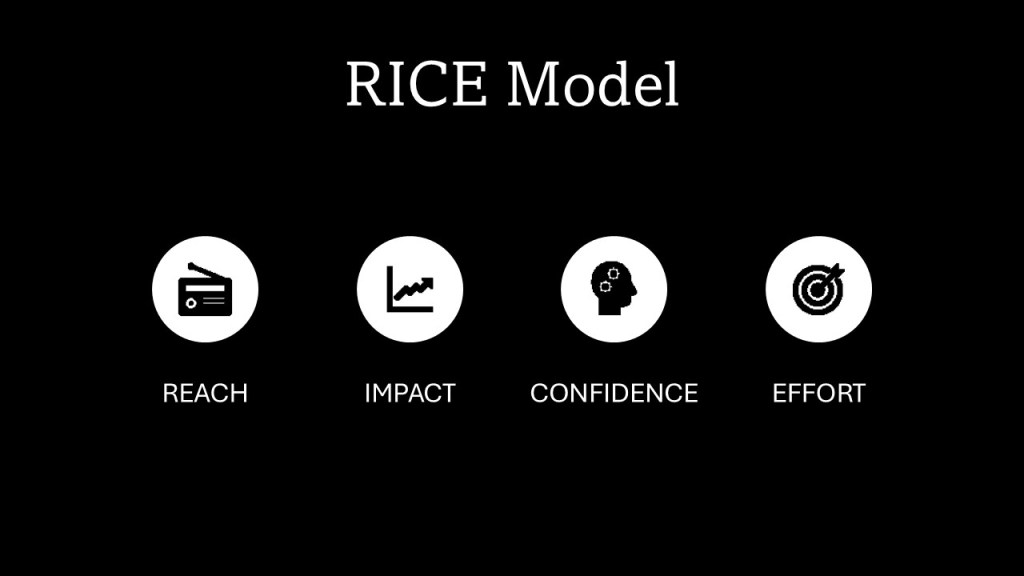
RICE is a prioritization framework designed to evaluate initiatives systematically based on Reach, Impact, Confidence, and Effort. It is particularly valuable for balancing opportunity size with feasibility such as deciding how to effectively maximizing project outcomes.
- Pros: Quantitative approach; considers multiple factors.
- Cons: Complex calculations; requires accurate estimation of all parameters.
How to: Plot projects on these factors. You can use a weighted scoring system if some criteria are more critical than others.
- Reach: How many people will it impact?
- Impact: How significantly will it impact them?
- Confidence: How confident are you in the estimate?
- Effort: How much time/resources does it require?
- Calculate: RICE score = (Reach × Impact × Confidence) ÷ Effort.
Bottom line
Prioritization frameworks offer leaders a structured approach to evaluate and tackle challenges, ensuring that high-value initiatives are given the attention they deserve. These tools are the methodical blueprint every team needs to thrive, from managing urgent tasks to strategizing for long-term success.
Dive Deeper
Additional resources you’ll love.
- Mastering Daily Focus – Return On Minute
- Prioritizing = Productivity – Return On Minute
- Measure What Matters: How Google, Bono, and the Gates Foundation Rock the World with OKRs
Templates you need. All free.





 Return On Minute
Leave a reply to Smart Leaders Follow This Simple Rule – Return On Minute Cancel reply